Showing posts with label TALK. Show all posts
Showing posts with label TALK. Show all posts
Wednesday, 12 May 2010

Website url
Here's the url of my website m-clark.co.uk (unfortunately matthewclark.co.uk was already taken)
Tuesday, 11 May 2010


Video Storyboard


The storyboard that I made before making my video. It made filming a whole lot easier knowing what I needed to do rather than thinking of it as I was filming it. All the film will be done in stop frame motion.
Feedback
"Matthews project is a new and exciting development on photography. I feel this method is unique and would create a range of individual and interesting photos which would never be the same twice. The way the camera is to be used in the air it created very different photos from what would normally be seen and I specifically liked the low quality photos that it had taken.
People want to see photos straight after they're taken and don't want to wait ages on them being developed. However, I feel this takes away the excitement and fun of getting photos developed and I love the way Matthew's camera incorporates this.
I would be extremly open to the idea of using this camera at any other family events and possibly consider the use of it at my wedding." User tester, Penny Clark.
I have also recieved some feedback from people I have tried to contact to get some user testing with them but due to various reasons this fell through.
"I think it's a great idea, arial photography is pretty hard to do unless you own a helicoptor or a giant crane, and there's so many places that have not been shot from above. I'd still like to help you out if it's digital, I'm not that snobby. Cheers" Lomographer Jamie Mellor
I also posted my press release onto the photography forum that I have been using throughout the project. This can be found at: http://www.talkphotography.co.uk/forums/showthread.php?t=224085
What I found from this is that I targeted the totally wrong people. The regulars on this forum would consider themselves as professionals with all the expensive high end photography gear and these were not the people that I had been designing for. A lot of the comments were very negative where they didn't see the fun, amateur side of the concept and were not very open to the the low quality images.
Another place that I tried to find some feedback from lomo users was on Flickr. There is a LOMO discussion group where I made a post about my project to get some feedback from these creative analogue photographers. This wasn't as popular as I thought it would be but there were some comments. The post can be found here: http://www.flickr.com/groups/lomo/discuss/72157623846096525/#comment72157624042771000
"I SIMPLY LOVE IT! great to use it at open concert :)!!! " Lomographer Lasere_84
"Very cool! I would definitely be interested in something like this if the price is right.You should contact some of the big on-line kite companies. They're mostly into Kite Aerial Photography, but they're also interested in stuff like this for options for when it's not windy."
Lomographer Gabriel Velasco
I have also had some great feedback from blogs and websites that Aerial Capture is featured on. These comments vary where people will criticise the camera whereas others will want to know how to buy one.
Someone from the BBC has approached me about my technique and if it could be used to capture images for a documentary they are doing. Unfortunately because my camera is only a concept and not a fully finished product I don't think they will be able to use it. But still waiting to hear back and see what they say.
People want to see photos straight after they're taken and don't want to wait ages on them being developed. However, I feel this takes away the excitement and fun of getting photos developed and I love the way Matthew's camera incorporates this.
I would be extremly open to the idea of using this camera at any other family events and possibly consider the use of it at my wedding." User tester, Penny Clark.
I have also recieved some feedback from people I have tried to contact to get some user testing with them but due to various reasons this fell through.
"I think it's a great idea, arial photography is pretty hard to do unless you own a helicoptor or a giant crane, and there's so many places that have not been shot from above. I'd still like to help you out if it's digital, I'm not that snobby. Cheers" Lomographer Jamie Mellor
I also posted my press release onto the photography forum that I have been using throughout the project. This can be found at: http://www.talkphotography.co.uk/forums/showthread.php?t=224085
What I found from this is that I targeted the totally wrong people. The regulars on this forum would consider themselves as professionals with all the expensive high end photography gear and these were not the people that I had been designing for. A lot of the comments were very negative where they didn't see the fun, amateur side of the concept and were not very open to the the low quality images.
Another place that I tried to find some feedback from lomo users was on Flickr. There is a LOMO discussion group where I made a post about my project to get some feedback from these creative analogue photographers. This wasn't as popular as I thought it would be but there were some comments. The post can be found here: http://www.flickr.com/groups/lomo/discuss/72157623846096525/#comment72157624042771000
"I SIMPLY LOVE IT! great to use it at open concert :)!!! " Lomographer Lasere_84
"Very cool! I would definitely be interested in something like this if the price is right.You should contact some of the big on-line kite companies. They're mostly into Kite Aerial Photography, but they're also interested in stuff like this for options for when it's not windy."
Lomographer Gabriel Velasco
I have also had some great feedback from blogs and websites that Aerial Capture is featured on. These comments vary where people will criticise the camera whereas others will want to know how to buy one.
Someone from the BBC has approached me about my technique and if it could be used to capture images for a documentary they are doing. Unfortunately because my camera is only a concept and not a fully finished product I don't think they will be able to use it. But still waiting to hear back and see what they say.




Press Images


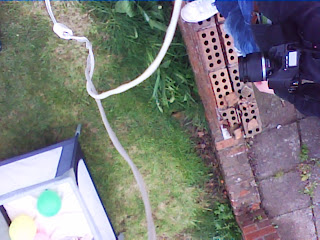
These are the images that I used along side my PR release. I wanted to show a variety of images that would allow the product to be conveyed as best as possible. They show the camera in the air, the reel being used, a white background setting, product details and a non studio setting. Some of these images were taken when I tested the product out for the first time.
Press Release
Here is the full version of my press release. I have used this when promoting my work on websites such as Coroflot, Open-Output, Design Spotter and Behance network. It has made it's way from these websites onto various others such as Wired, Yanko and eventually Core77 without me having to approach them.
Matthew Clark
11D Dudhope Street
Dundee
DD1 1JT
T: +44 (0) 7905856174
E: m.y.clark@dundee.ac.uk
23/04/10
PRESS RELEASE
For immediate release
Digital camera with built-in balloon.
Product designer Matthew Clark has designed a new camera concept that takes digital domestic photography to the next level.
Aerial Capture is a lightweight digital camera with a built-in 3 foot balloon allowing families of all ages to take great playful aerial photos from 20 metres high that are colourful with a stylistic contrast.
Research by Matthew gave him an insight into how continuous technological advancements in digital cameras are making everyday photography easy, where technically perfect images are produced. He feels this is slowly taking the fun and magic away from domestic photography.
This exciting camera is flash free and to be used in bright light shooting conditions at various special occasions like weddings, birthdays, festivals and special events where it’s bound to catch everyone’s attention.
The camera has an attachment to inflate the balloon with helium letting the camera take off into the sky. Kept tethered to the user with a hand held reel, a simple flick of a switch triggers the camera. Being fun, unique and simple, the lo-fi outcomes means that hundreds of striking photos can be taken and stored on the internal memory which can be easily accessed from the USB cable.
After first being exhibited at his University of Dundee degree show in May, Matthew Clark will be exhibiting this robust, vividly coloured aerial camera at New Designers in London later this year.
-ENDS-
Notes to editor:
• Matthew Clark is a young hard working designer who will be graduating this year where he hopes to make the transition form academia to industry.
• He designs and makes stylish products that are playful, meaningful and finished to a high standard with easy to use interactions while also ensuring they have been designed with users in mind.
• Crossing the boundaries between design, engineering and other design disciplines, the product design course in Dundee allows students to design, make and showcase their creative products. With briefs set by leading industry companies such as NCR and Microsoft, the course ensures students are capable of working with companies both globally and locally.
Press Enquiries
Matthew Clark
E: m.y.clark@dundee.ac.uk
T: +44 (0) 7905856174
Matthew Clark
11D Dudhope Street
Dundee
DD1 1JT
T: +44 (0) 7905856174
E: m.y.clark@dundee.ac.uk
23/04/10
PRESS RELEASE
For immediate release
Digital camera with built-in balloon.
Product designer Matthew Clark has designed a new camera concept that takes digital domestic photography to the next level.
Aerial Capture is a lightweight digital camera with a built-in 3 foot balloon allowing families of all ages to take great playful aerial photos from 20 metres high that are colourful with a stylistic contrast.
Research by Matthew gave him an insight into how continuous technological advancements in digital cameras are making everyday photography easy, where technically perfect images are produced. He feels this is slowly taking the fun and magic away from domestic photography.
This exciting camera is flash free and to be used in bright light shooting conditions at various special occasions like weddings, birthdays, festivals and special events where it’s bound to catch everyone’s attention.
The camera has an attachment to inflate the balloon with helium letting the camera take off into the sky. Kept tethered to the user with a hand held reel, a simple flick of a switch triggers the camera. Being fun, unique and simple, the lo-fi outcomes means that hundreds of striking photos can be taken and stored on the internal memory which can be easily accessed from the USB cable.
After first being exhibited at his University of Dundee degree show in May, Matthew Clark will be exhibiting this robust, vividly coloured aerial camera at New Designers in London later this year.
-ENDS-
Notes to editor:
• Matthew Clark is a young hard working designer who will be graduating this year where he hopes to make the transition form academia to industry.
• He designs and makes stylish products that are playful, meaningful and finished to a high standard with easy to use interactions while also ensuring they have been designed with users in mind.
• Crossing the boundaries between design, engineering and other design disciplines, the product design course in Dundee allows students to design, make and showcase their creative products. With briefs set by leading industry companies such as NCR and Microsoft, the course ensures students are capable of working with companies both globally and locally.
Press Enquiries
Matthew Clark
E: m.y.clark@dundee.ac.uk
T: +44 (0) 7905856174
Monday, 10 May 2010
Testing
For my user testing I decided that it would be appropriate to take it back to my family. This is where I would feel more comfortable and get more out of the testing session rather than if it was with some random people. They have also been used at the start of the project so I thought it would be appropriate to take this back to them as it they are still relevent to the project.
Since my user group has been focusing upon famiies and domestic photography it was great to take along to my brother and sisters birthday to test it out. It gave a good feeling as to how it would be used in real life.
Although the camera was too heavy for the balloon to lift, it was still able to take images and the interaction experience was still the same. There is also a good range of generations to work with in my family from my grandad down to my neice which gives me a good user testing group full of varied opinions.


Since my user group has been focusing upon famiies and domestic photography it was great to take along to my brother and sisters birthday to test it out. It gave a good feeling as to how it would be used in real life.
Although the camera was too heavy for the balloon to lift, it was still able to take images and the interaction experience was still the same. There is also a good range of generations to work with in my family from my grandad down to my neice which gives me a good user testing group full of varied opinions.

What I found was how amazed everyone was about the size of the balloon, this seems to draw people into the project immediately. The balloon didn't take as long to inflate as I had expected and was approximately 1.30 - 2minutes and uses one full disposable helium cylinder that is enough to fill 30 9" balloons.
Although the balloon was used in a garden and not as open as it is intended for, it worked very well since it was a warm day with sun coming and going. After explaining to everyone how it worked, which they catched onto very well they wanted to know more about how it was made and how it works which I found very interesting.
After the camera and balloon was all set up I stood back and observed how some of them interacted with it and questioned what to do with it. When using the switch, it was simple and where they found it satisfying and easy to control with one hand. If the balloon had lifted higher then I think the impact of the results would of been greater but the wau everyone wondered what the camera was catching was exactly what I was trying to embody with the camera.
Watching the smiles on everyones faces as they interacted with the reel and watched the balloon (as someone held it up) was a joy to watch. And as it was a windless day, controlling the balloon was not difficult to do and they said that they felt in complete control with the reel and that if the balloon had enough lift that it would not come loose and float away.
This was a successful day testing out Aerial Capture where the interactions and the experience with the camera were correct and the users could see the potential of using it for other events like weddings, parties etc and were amazed by the creative results that they had produced.
The results can be seen in the post example images.
Sunday, 25 April 2010
Monday, 19 April 2010
Monday, 12 April 2010
Fonts and Names
 For part of the TALK stage I need to make up a press release along with images if I wish to publish my idea in any way. Before I can do this, I feel it's essential for the project to have a name.
This is going to be inspired the lomo range, in which their product names are all fun, playful and exciting. I want my camera's name to reflect this. It's becoming apparent that this is very tricky and I still haven't settled on anything yet.
I've also gathered inspiration from the fonts that lomo uses for their products. What I liked about this was how the font reflects the camera. For example, the holga is almost a hexagon with very angular edges and this can be seen reflected in the names font. I really like this playful aspect of it but not sure if I will be able to do this well.
Tuesday, 16 February 2010
Detail and Context Workshop
Product Functionality: what is the primary funtion of your product? what other functions does it have? what else can it do? what is your rationale?
-to take photos
-to create fun
-a new experience
-light enough to float
-robust
-soft to grip
-memory to store photos
Percieved Affordances: are the designed properties of an object that suggest how it could be used.
-len, what it is
-reel, circular shape to reference motion
-direction of buttons
-grip, where to hold
-direction of reel,anti/clockwise
Identifiers: these suggest to users what something is and the category it belongs to. Identifiers often refer to Archetypes, but can help us to distinguish between subordinate categories.
Form: circular although pictures are rectangular, handles are not consistent//boxy, cuboid, circular lens.
Colour: black areas show interactions, need to indicate points of contacts (grip pads)
Material: leather indicating retro/vintage cameras, plastic=modern, metal=stability.
Environment of use: outdoors, leather could convey adventure
Style: retro modern
Character Traits: a combination of traits defines the character of a product. They are usually expressed by adjectives. Semantic dimensions can help us to describe the character of artefacts.
masculine//fun//playful//lightweight//dull//modern//durable
Intrinsic Motivators: these are features that are pleasurable to use and provide enjoyment, they are often playful. they invite users to attend to, observe, touch, listen to, play with them.
on/off button//reeling in and out (possible noise)//shutter button//balloon itself
Distinguishers: these are product features which have been designed to be distinct in order to clarify, or dictate, how to use a product.
Use of colour to indicate points of interaction//material and texture to show areas of contact and grip
Expressives: These are material qualities expressed by an object in order to clarify, or dictate, how to use a product.
Leather indicating grip//plastic showing lightweight//balloon is attention seeking and has a feel good vibe//weatherproof//robust//sturdy//clinical//playful//cheap:expensive??
Pointers: these are features that direct attention to something other than themselves (e.g. switches and controls) and could include icons, pictograms, symbols, etc.
lens(?), reel indicates to camera and balloon. switch in hand makes the user look at the camera
Metaphor: a metaphor is when one aspect of a product borrows a meaning that you would normally attribute to something else.
film reel to indicate motion and winding//reel styled to look like viewmaster card//button referenced to viewmaster click interaction//string references to kites//form related to retro and vintage camera style//low quality of image relates to lomo movement and creative photography.
Instructions: these are generally verbal features that describe, how to use a product.
how to set up the camera//how to inflate the balloon and attach to the camera//reel directions//button to take photos.
-to take photos
-to create fun
-a new experience
-light enough to float
-robust
-soft to grip
-memory to store photos
Percieved Affordances: are the designed properties of an object that suggest how it could be used.
-len, what it is
-reel, circular shape to reference motion
-direction of buttons
-grip, where to hold
-direction of reel,anti/clockwise
Identifiers: these suggest to users what something is and the category it belongs to. Identifiers often refer to Archetypes, but can help us to distinguish between subordinate categories.
Form: circular although pictures are rectangular, handles are not consistent//boxy, cuboid, circular lens.
Colour: black areas show interactions, need to indicate points of contacts (grip pads)
Material: leather indicating retro/vintage cameras, plastic=modern, metal=stability.
Environment of use: outdoors, leather could convey adventure
Style: retro modern
Character Traits: a combination of traits defines the character of a product. They are usually expressed by adjectives. Semantic dimensions can help us to describe the character of artefacts.
masculine//fun//playful//lightweight//dull//modern//durable
Intrinsic Motivators: these are features that are pleasurable to use and provide enjoyment, they are often playful. they invite users to attend to, observe, touch, listen to, play with them.
on/off button//reeling in and out (possible noise)//shutter button//balloon itself
Distinguishers: these are product features which have been designed to be distinct in order to clarify, or dictate, how to use a product.
Use of colour to indicate points of interaction//material and texture to show areas of contact and grip
Expressives: These are material qualities expressed by an object in order to clarify, or dictate, how to use a product.
Leather indicating grip//plastic showing lightweight//balloon is attention seeking and has a feel good vibe//weatherproof//robust//sturdy//clinical//playful//cheap:expensive??
Pointers: these are features that direct attention to something other than themselves (e.g. switches and controls) and could include icons, pictograms, symbols, etc.
lens(?), reel indicates to camera and balloon. switch in hand makes the user look at the camera
Metaphor: a metaphor is when one aspect of a product borrows a meaning that you would normally attribute to something else.
film reel to indicate motion and winding//reel styled to look like viewmaster card//button referenced to viewmaster click interaction//string references to kites//form related to retro and vintage camera style//low quality of image relates to lomo movement and creative photography.
Instructions: these are generally verbal features that describe, how to use a product.
how to set up the camera//how to inflate the balloon and attach to the camera//reel directions//button to take photos.
Friday, 12 February 2010
Rationale Revisited
"Digital cameras are making photography 'cold, sterile and just not interesting.' Tom Hunter
This digital camera, designed to take aerial photographs while being attached to a 3 foot helium inflated balloon, allows families of all ages to take photos from a new and unusual perspective, producing interesting and creative results.
With continuous technological advances in digital cameras, the magic and fun element that domestic photography should have is slowly disappearing, which can be seen with cameras such as the Polaroid. There was an element of surprise but also disappointment at times by not knowing what the outcome would be, while a regular digital camera would likely produce many uninteresting results.
The use of helium balloons means that no specific wind conditions are required, like a kite, and can be used almost everywhere. “Of course, the best thing of all is that any passerby who looks up at the moment your camera takes a picture is sure to be smiling at all those balloons." (photojojo.com)
As its flash free, it’s intended for daytime bright light shooting and unlike a regular digital camera or camera phone; the device does not have a viewfinder or display that can be used to frame photos. Using a hand held device, the camera is triggered by the flick of a switch allowing the user to control the time interval between photos.
Fitted with a 2GB internal flash memory, it takes pictures at a resolution of 1600x1200 pixels and stores them as jpeg files on the internal memory, allowing users to take hundreds of images. These low resolution images will create a new photography experience for a diverse range of users."
This digital camera, designed to take aerial photographs while being attached to a 3 foot helium inflated balloon, allows families of all ages to take photos from a new and unusual perspective, producing interesting and creative results.
With continuous technological advances in digital cameras, the magic and fun element that domestic photography should have is slowly disappearing, which can be seen with cameras such as the Polaroid. There was an element of surprise but also disappointment at times by not knowing what the outcome would be, while a regular digital camera would likely produce many uninteresting results.
The use of helium balloons means that no specific wind conditions are required, like a kite, and can be used almost everywhere. “Of course, the best thing of all is that any passerby who looks up at the moment your camera takes a picture is sure to be smiling at all those balloons." (photojojo.com)
As its flash free, it’s intended for daytime bright light shooting and unlike a regular digital camera or camera phone; the device does not have a viewfinder or display that can be used to frame photos. Using a hand held device, the camera is triggered by the flick of a switch allowing the user to control the time interval between photos.
Fitted with a 2GB internal flash memory, it takes pictures at a resolution of 1600x1200 pixels and stores them as jpeg files on the internal memory, allowing users to take hundreds of images. These low resolution images will create a new photography experience for a diverse range of users."
User Interaction
I made this information board for the soft crit I had on Monday so I could explain each stage of how the product is used (not got a name for it yet!!) I didn't have time to go through it but here it is.
It's helped me to identify which areas of the project are still unclear and explain to others key areas that they never understood. What I've learned from it is what areas need work, like the balloon attachment, how the box is made, the helium/balloon inflating interaction and whether the balloon (and camera) is reused.
These areas I should really have resolved by now but will hopefully have this done by the end of next week.
Sunday, 24 January 2010
Rationale
The Project
My project started out by looking into domestic photography and how our everyday culture allows us to take photos whenever and wherever. This involved looking at how families store and take photos and the environment that these were viewed in. I looked at ways to alter, enhance or create a new way of doing this. My idea that I have taken forward still fits with this direction and is a new way to take photos. It explores perspectives of taking photos and the play of light on the digital sensor. This can be classed as extreme or aerial photography.
What is it?
A device capable of taking photos and videos for aerial photography snapshots. This is specifically designed for the attachment to a 3ft balloon giving the device enough lift allowing the view from above to be captured.
But why balloons?? Unlike a kite, they don't require wind conditions to provide the lift. Unlike an RC helicopter it doesn't require propellers or power to lift it. Helium balloons are widely available and can be used almost everywhere.
"Of course, the best thing of all is that any passerby who looks up at the moment your camera takes a picture is sure to be smiling at all those balloons." (photojojo)
Who is it for?
Because I want to create a new photography movement and artistic style of experimental photography, the people that are best associated with this is the lomography community. This group are open to experimenting with photography and are very creative when it comes to taking that unique photo. Because of this my form and styling of my product will be inspired by lomo cameras and the people that use them.
Why am I doing it?
Digital cameras are making photography 'cold,sterile and just not interesting' which is taking away the magic and fun that taking photos had, especially with the polaroid. There was an element of surprise but also disappointment at times by not knowing what the outcome would be. This has now been changed due to the technological advances in photography. This aerial photography device will create a new style of artistic and experimental photography.
How does it work?
-A 3(possibly 5) foot balloon is filled with helium
-Balloon is attached to a camera device
-Camera device is attached to a reel
-Balloon is sent into the air
-Photos/videos are taken via a remote which is built into the reel
-Data is stored on the camera
-Camera is controlled via the reel
-Reeled in to retrieve camera
-Plug into laptop to retrieve photos
Additional Info:
Videos are 30 frames per second and a resolution of 720x480. Photo quality is 1600*1200 pixels. Memory will be classed as internal as an SD card will be inside to store the data but cannot be removed by the user. Data is retrieved through connecting it via usb to a computer/laptop. Videos will be in AVI format while photos will be JPEG.
My project started out by looking into domestic photography and how our everyday culture allows us to take photos whenever and wherever. This involved looking at how families store and take photos and the environment that these were viewed in. I looked at ways to alter, enhance or create a new way of doing this. My idea that I have taken forward still fits with this direction and is a new way to take photos. It explores perspectives of taking photos and the play of light on the digital sensor. This can be classed as extreme or aerial photography.
What is it?
A device capable of taking photos and videos for aerial photography snapshots. This is specifically designed for the attachment to a 3ft balloon giving the device enough lift allowing the view from above to be captured.
But why balloons?? Unlike a kite, they don't require wind conditions to provide the lift. Unlike an RC helicopter it doesn't require propellers or power to lift it. Helium balloons are widely available and can be used almost everywhere.
"Of course, the best thing of all is that any passerby who looks up at the moment your camera takes a picture is sure to be smiling at all those balloons." (photojojo)
Who is it for?
Because I want to create a new photography movement and artistic style of experimental photography, the people that are best associated with this is the lomography community. This group are open to experimenting with photography and are very creative when it comes to taking that unique photo. Because of this my form and styling of my product will be inspired by lomo cameras and the people that use them.
Why am I doing it?
Digital cameras are making photography 'cold,sterile and just not interesting' which is taking away the magic and fun that taking photos had, especially with the polaroid. There was an element of surprise but also disappointment at times by not knowing what the outcome would be. This has now been changed due to the technological advances in photography. This aerial photography device will create a new style of artistic and experimental photography.
How does it work?
-A 3(possibly 5) foot balloon is filled with helium
-Balloon is attached to a camera device
-Camera device is attached to a reel
-Balloon is sent into the air
-Photos/videos are taken via a remote which is built into the reel
-Data is stored on the camera
-Camera is controlled via the reel
-Reeled in to retrieve camera
-Plug into laptop to retrieve photos
Additional Info:
Videos are 30 frames per second and a resolution of 720x480. Photo quality is 1600*1200 pixels. Memory will be classed as internal as an SD card will be inside to store the data but cannot be removed by the user. Data is retrieved through connecting it via usb to a computer/laptop. Videos will be in AVI format while photos will be JPEG.
Tuesday, 19 January 2010
Week 15
These are some questions that I answered yesterday to try and clear the rationale behind my project. It's not crystal clear yet but it did help me to communicate my idea in an easier manner.
What are you designing?
A device that is capable of capturing aerial videos and images for aerial photography purposes via the attachment to balloons.
Why should it exist?
From user research I found that people are finding digital photography clean, clinical and easy. I propose that my product will bring more fun into photography which was seen in the days of the polaroid. Capturing photos from various angles and perspectives will bring fun to domestic photography through capturing unconventional videos and images.
How does it work?
A remote device triggers the shutter on the camera/video device which is attached to a balloon. This will be floating in the air and will be attached and controlled by the user on a reel.
Who will use it?
Microsoft research/families/amateur photographers and most importantly I aim to target the lomography community to create a new photography movement/hobby.
Who will test it?
Internationally I would like a member/s of the lomo community. Locally would be a local photography group. And it would be great if I could get a famous photographer to test it, like Martin Parr, Ansel Adams or Thomas Hawk. If I could get Tim Reagan from MSR to test it aswell would be a great!!
What are you designing?
A device that is capable of capturing aerial videos and images for aerial photography purposes via the attachment to balloons.
Why should it exist?
From user research I found that people are finding digital photography clean, clinical and easy. I propose that my product will bring more fun into photography which was seen in the days of the polaroid. Capturing photos from various angles and perspectives will bring fun to domestic photography through capturing unconventional videos and images.
How does it work?
A remote device triggers the shutter on the camera/video device which is attached to a balloon. This will be floating in the air and will be attached and controlled by the user on a reel.
Who will use it?
Microsoft research/families/amateur photographers and most importantly I aim to target the lomography community to create a new photography movement/hobby.
Who will test it?
Internationally I would like a member/s of the lomo community. Locally would be a local photography group. And it would be great if I could get a famous photographer to test it, like Martin Parr, Ansel Adams or Thomas Hawk. If I could get Tim Reagan from MSR to test it aswell would be a great!!
Gant Chart
Yesterday, I was starting to plan out the next 17 weeks of my project. It was quite difficult to try and plan what steps I would be taking to make my product when I'm still unsure of what it's going to look like and what it is. The idea of the gant chart is to help visualise the time that I have left on the project and where all the deadlines are situated within this timescale. I will post up my final chart in the next couple of weeks when I finish it but here's a couple of images from the first drafts that I was doing yesterday in a group.


Subscribe to:
Posts (Atom)